
-
We’re currently investigating an issue related to the forum theme and styling that is impacting page layout and visual formatting. The problem has been identified, and we are actively working on a resolution. There is no impact to user data or functionality, this is strictly a front-end display issue. We’ll post an update once the fix has been deployed. Thanks for your patience while we get this sorted.
You are using an out of date browser. It may not display this or other websites correctly.
You should upgrade or use an alternative browser.
You should upgrade or use an alternative browser.
Discussion RDNA 5 / UDNA (CDNA Next) speculation
Page 112 - Seeking answers? Join the AnandTech community: where nearly half-a-million members share solutions and discuss the latest tech.

Win2012R2
Golden Member
They don't need as high freq, so will get rejects = considerably lower, though reports surfaced that Nvidia will accept two tier HMB, no doubt to limit how many AMD can get, plus maybe Micron's stuff is good enoughHow much do you expect AMD to buy each hbm4?

adroc_thurston
Diamond Member
Micron stuff can't be "good enough" since AMD is doing kustom HBM4.They don't need as high freq, so will get rejects = considerably lower, plus maybe Micron's stuff is good enough
Win2012R2
Golden Member
In which case it ain't good enough, but will take off some demand from ASIC makers who might not need custom stuffMicron stuff can't be "good enough" since AMD is doing kustom HBM4.
adroc_thurston
Diamond Member
ASIC slaves are getting HBM4 like late next year.In which case it ain't good enough, but will take off some demand from ASIC makers who might not need custom stuff
Irrelevant for MI455x ramp.
adroc_thurston
Diamond Member
no.Do I need to know more about cdna 5?
Just wait until launch it's not even that far away.

1250
Member
not yet.
Next week is Helix(gdc), and the week after that, Nvidia(gtc).
I'll focus on 심상수련(Imagery Training).
Last edited:

marees
Platinum Member
This AI Startup Demands AMD to Build a 96 GB RDNA 5 GPU for a Wild Venture, and Is Already Seeking Investors
Muhammad ZuhairMar 8, 2026 at 03:53pm EDT
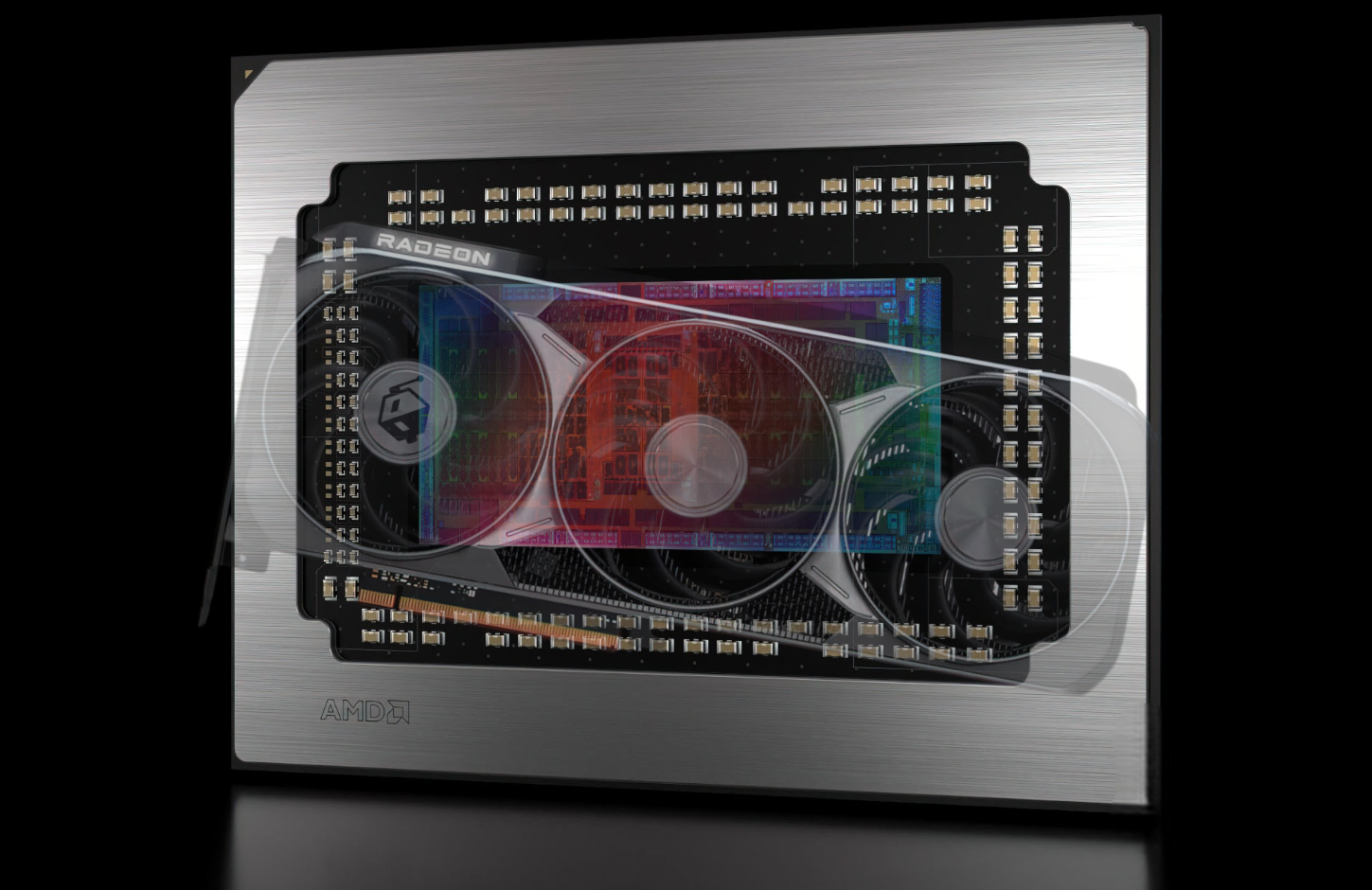
This AI Startup Demands AMD to Build a 96 GB RDNA 5 GPU for a Wild Venture, and Is Already Seeking Investors
The demand for compute power has gone wild out there, and in the midst of it, the AI startup TinyCorp has a rather interesting demand for AMD.
 wccftech.com
TinyCorp has a rather interesting demand for AMD, involving a 'chonky' RDNA 5 GPU.
TinyCorp Hopes To Get an RDNA 5 GPU With 96 GB VRAM For $2,500 Each; Probably Ignoring the Memory Shortages
(I asked grok & it said an AT0 with 96gb to 128gb ram will cost $4000 to $8000)
Interestingly, TinyCorp claims it will build its own board with RDNA 5 silicon onboard, provided AMD doesn't release a similar model.


adroc_thurston
Diamond Member
That's a proviz(-class) board with appropriate margins.I think 96GB of VRAM for $2500 is doable, but then we'll have to see the price for the rest of the card.
$5k at least.

Makaveli
Diamond Member
This no way they are selling these if they make them for 1/4 the price NV charges for a 96GB GPU.That's a proviz(-class) board with appropriate margins.
$5k at least.
will be in the 5-7k range.
I think 96GB of VRAM for $2500 is doable, but then we'll have to see the price for the rest of the card.
The RAM alone would be like $1000 or more currently, lol.
Isn't that pointless when most modern renderers have some kind of "out of bounds" memory option or something that allows it to use the system memory instead when the VRAM fills up?That's a proviz(-class) board with appropriate margins.
$5k at least.
ToTTenTranz
Golden Member
I think @coercitiv was making a joke about $2500 being the cost of the 96GB VRAM alone.The RAM alone would be like $1000 or more currently, lol.
Pricing Pro cards for ML loads using the same "Nvidia -10%" method as they use in consumer GPUs would result in no one at all buying their cards. The consequences for inadequate GPUs in professional settings are completely different from a guy not being able to use the best upscaler in the latest videogame.This no way they are selling these if they make them for 1/4 the price NV charges for a 96GB GPU.
will be in the 5-7k range.
As someone who's procured Pro GPUs for ML loads throughout the past 5 years, this is unfortunately way too risky.Give me a $6-$8k 96GB GDDR7 RDNA 5/UDNA card with 4 way interconnect capability and I will buy those over any RTX Pro 6000. That would be a real game changer and also both economical and technically feasible
Unless you know exactly what the loads you're going to be running and you're absolutely sure AMD GPUs can run them (not our case), odds are you'll run into a bunch of loads AMD GPUs just can't run properly if at all. This means tens / hundreds of euros/dollars sitting idle or worse, spending that or more in precious engineering resources to make things work.
ROCm may work fine for a select number of things, but every brand new ML state-of-the-art app or implementation comes out the window with full Nvidia support, and AMD hardware may or may not work some months/years afterwards.
For example, these tiny corp guys are saying they'll use AT0 only to run llm inference of the latest deepseek and qwen models like llama-cpp and then sell cloud services using that hardware. That's fine, but if a big new thing comes up that is built from the ground up on CUDA / CUDNN (which is very likely).
dangerman1337
Senior member
That leaked MLID slide that 128GB AT0 SKU so they'll probably load pro ones with 4GB Modules.
You're right that Nvidia has better software support and every new ML implementation comes with full Nvidia support... and thats exactly why I said AMD needs to create workstation competitors to Nvidia like an RTX Pro 6000 competitor. Nvidia is being used by most professionals for their prototyping systems and its a really decent deal. But the market is waiting for such products from AMD to support but they havent had a proper productline. CUDA moat is on shaky ground. At my workplace we use mainly Nvidia GPUs for prototyping and self hosting part of our services(I would say 90%). Tested AMD R9700 and its actually really good especially with Vulkan(ROCm has good potential but again AMD just needs to give us the kind of cards we need and we'll sort out the software),but it just doesnt meet our minspec requirements by some small margins because AMD didnt make any Halo cards this time otherwise an AMD "R9800" would have been a huge game changer if it existed.As someone who's procured Pro GPUs for ML loads throughout the past 5 years, this is unfortunately way too risky.
Unless you know exactly what the loads you're going to be running and you're absolutely sure AMD GPUs can run them (not our case), odds are you'll run into a bunch of loads AMD GPUs just can't run properly if at all. This means tens / hundreds of euros/dollars sitting idle or worse, spending that or more in precious engineering resources to make things work.
ROCm may work fine for a select number of things, but every brand new ML state-of-the-art app or implementation comes out the window with full Nvidia support, and AMD hardware may or may not work some months/years afterwards.
For example, these tiny corp guys are saying they'll use AT0 only to run llm inference of the latest deepseek and qwen models like llama-cpp and then sell cloud services using that hardware. That's fine, but if a big new thing comes up that is built from the ground up on CUDA / CUDNN (which is very likely).
With AI driven development even being used for kernel level optimizations, and the growing move towards optimizing GPUs and other ASICs for ML workloads, AMD could seriously increase its market share in that core workstation and entrylevel datacenter cards. which is key to getting the same level of developer support that Nvidia gets with CUDA that you mentioned. The issue now is what kind of product lineup AMD makes with RDNA 5/UDNA. They are doing a good job with their rackscale systems like Helios and working with META but its when they get more market share in the workstation area that they will actually seriously dent the CUDA moat. Make that RTX pro 6000 competitor even if its just 30% more powerful and give me 96GB of VRAM with 4 way interconnect and I will buy at least 8 of them even more over Nvidia. Unless Nvidia puts Nvlink back in its workstation cards, otherwise AMD will have a serious opportunity.
marees
Platinum Member
more likely dev kit has 32gb
but real console will have only 24gb. that doesn’t require clamshell memory
marees
Platinum Member
with 192bit the max you can do is 24gbOr 3x8 + 2x4, 8gb of which could be dedicated to CPU
No 192bit?
that 8gb must be a separate piece of hardware outside of that 192
TRENDING THREADS
-
 Discussion Zen 5 Speculation (EPYC Turin and Strix Point/Granite Ridge - Ryzen 9000)
- Started by DisEnchantment
- Replies: 25K
-
Discussion Intel Meteor, Arrow, Lunar & Panther Lakes + WCL Discussion Threads
- Started by Tigerick
- Replies: 25K
-
 Discussion Intel current and future Lakes & Rapids thread
- Started by TheF34RChannel
- Replies: 24K
-

-
