• We’re currently investigating an issue related to the forum theme and styling that is impacting page layout and visual formatting. The problem has been identified, and we are actively working on a resolution. There is no impact to user data or functionality, this is strictly a front-end display issue. We’ll post an update once the fix has been deployed. Thanks for your patience while we get this sorted.

Question Zen 6 Speculation Thread

Page 385 - Seeking answers? Join the AnandTech community: where nearly half-a-million members share solutions and discuss the latest tech.
Its also not normal to be on hardware tech forums speculating about CPUs like Zen 6 that technically don't even exist yet.

What even is the argument? Local AIs are useless because GPUs are never going to get better or something? Meanwhile I've been very happy using GPT-OSS on my 6900xt since it came out... ya know a card that costs like $500 on ebay?
GPT-OSS at what size?
 
Zen0.6%
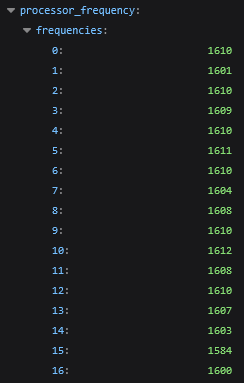
"processor_frequency": {
"frequencies": [
2006,
1529,
1388,
1387,
1387,
1369,
1389,
1388,
1387,
1383,
1387,
1386,
1388,
1388,
1387
]
},
32MB L3? Surprising. Is each core, dense or classic, getting the full 4MB of L3 per core? And are they all in one cluster, unlike strix point?
Also, still only 32KB of LIi? Is this not surprising?
 
Also, still only 32KB of LIi? Is this not surprising?
Not really, it's still Family 1Ah.
The only time they changed L1 capacity within a family was Zen 1 -> 2. Them changing even the scheduler layout within a family is surprising.
32MB L3? Surprising. Is each core, dense or classic, getting the full 4MB of L3 per core? And are they all in one cluster, unlike strix point?
No idea.
 
Not really, it's still Family 1Ah.
The only time they changed L1 capacity within a family was Zen 1 -> 2. Them changing even the scheduler layout within a family is surprising.
RWC from GLC doubled the L1i cache on a tick core T-T
But given Zen 5's weaknesses, increasing the L1i capacity sounded like it would be extremely helpful. Maybe the L1i prefetch significantly improved, or they beefed up the uop cache even more.
I do think it's a "phoenix-2" like setup where it's all in one cluster. Since this is an ES, it could be misreporting, but if they were in separate clusters I imagine it would just not be able to differentiate or add the L3 from another cluster rather than accidentally combining them.
 
"processor_frequency": {
"frequencies": [
2006,
1529,
1388,
1387,
1387,
1369,
1389,
1388,
1387,
1383,
1387,
1386,
1388,
1388,
1387
]
},
Why are there 15 processor frequencies reported? I am entirely ignorant of what GB6 is doing, but I would have expected it to show as many frequencies as there are logical CPUs in a system. Is this a new 5-core CPU with SMT3? ;-)
 
Why are there 15 processor frequencies reported? I am entirely ignorant of what GB6 is doing, but I would have expected it to show as many frequencies as there are logical CPUs in a system. Is this a new 5-core CPU with SMT3? ;-)
I'm just guessing, but I think these are clock readings at different points in time. Some 10-core chips have like 30 readings over the course of a run for example.
 
Zen0.6%
"processor_frequency": {
"frequencies": [
2006,
1529,
1388,
1387,
1387,
1369,
1389,
1388,
1387,
1383,
1387,
1386,
1388,
1388,
1387
]
},
If you extrapolate the score from the 1.4 GHz clock to 5.7 GHz and assume the usual GB6 score for Zen 5 core at 5.7 GHz is 3550 points, it turns out the IPC has gone up by... /drumroll/
38 %
/badum-tssss/
 
Back
Top