• We’re currently investigating an issue related to the forum theme and styling that is impacting page layout and visual formatting. The problem has been identified, and we are actively working on a resolution. There is no impact to user data or functionality, this is strictly a front-end display issue. We’ll post an update once the fix has been deployed. Thanks for your patience while we get this sorted.

Question AMD Phoenix/Zen 4 APU Speculation and Discussion

Page 35 - Seeking answers? Join the AnandTech community: where nearly half-a-million members share solutions and discuss the latest tech.
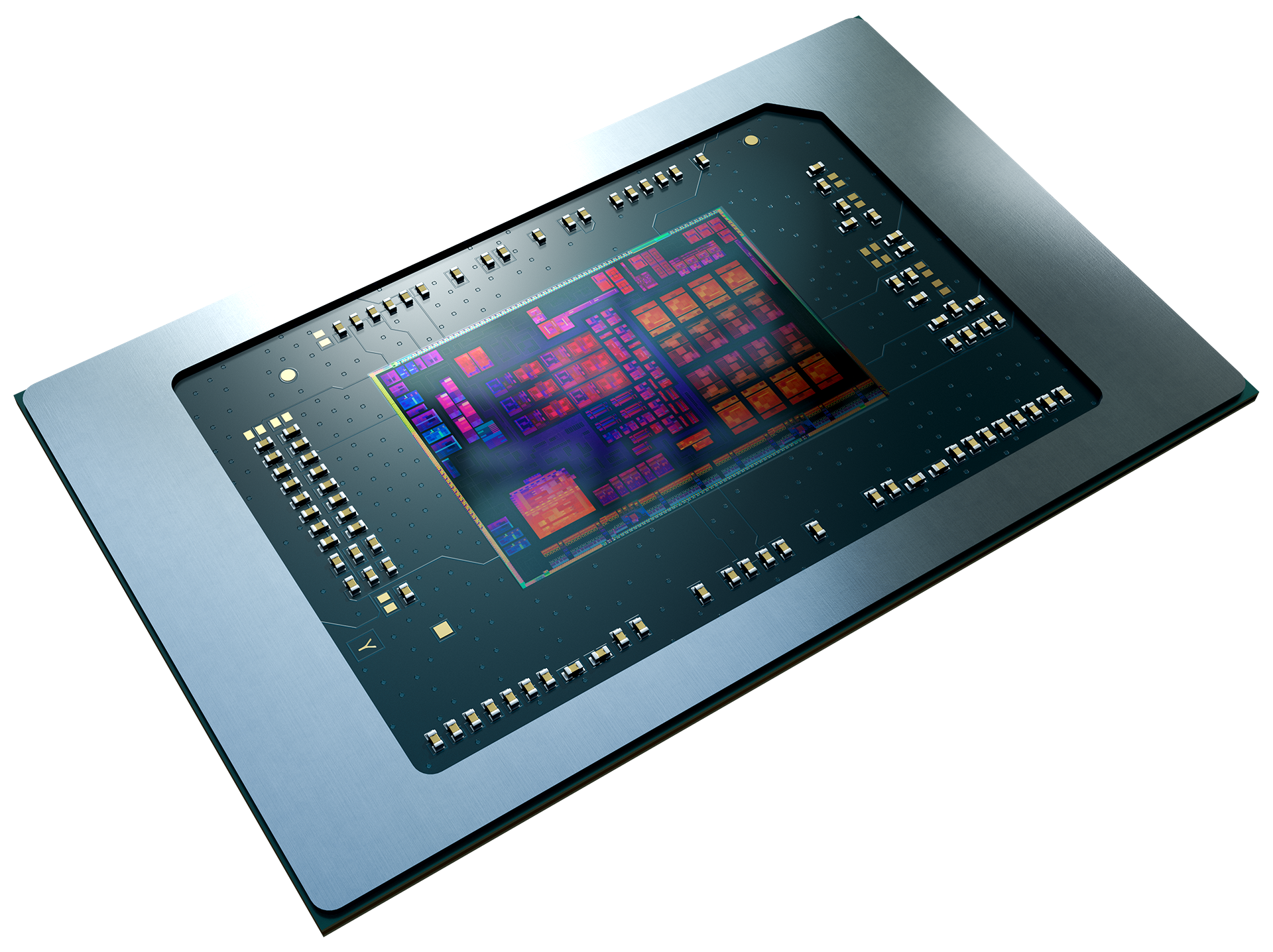
I'm really impressed how advanced the Phoenix APU is. Anyone notice that it's the first AMD part with a dedicated HW AI inference engine, called Ryzen AI. Latest CPU and GPU arch, plus 4nm, plus new AI engine. Really a leading edge part.

Phoenix lineup that comes with the Zen 4 architecture and RDNA 3 graphics engine paired with AMD’s first Ryzen AI engine built on the new XDNA architecture. This new advance uses the tech from AMD’s Xilinx acquisition one short year after the purchase to infuse a dedicated AI engine inside AMD’s latest laptop chips.
 
I'm really impressed how advanced the Phoenix APU is. Anyone notice that it's the first AMD part with a dedicated HW AI inference engine, called Ryzen AI. Latest CPU and GPU arch, plus 4nm, plus new AI engine. Really a leading edge part.

That's all very nice, but knowing IGP perfomance or CPU performance limited to 15-25W is way more interesting to me.
 
Last edited:
That chart is more than enough to know the performance they measured.
CB R23 nT
7940HS - 134% -> 12370/108*134 = 15348 points
M1 Pro - 108% -> This is a known score: 12370 points
1280P - 100% -> 12370/108*100 = 11453 points

Want to claim that chart is wrong or that press release? Ok, then give us some proof. Just because there are many mistakes, doesn't mean this is also wrong.

edit:
You should really pay more attention to what you use as proof.

That footnote 9 is only about AMD and Apple. Phoenix has 34% higher performance on average in those 5 tests than M1 Pro.
View attachment 74067

View attachment 74066

And If you looked hard at that chart Intel vs Apple vs AMD, then you would notice Phoenix is only 24%(134/108) faster in CB R23 nT than M1 Pro.
So both of them look correct.

Except you are forgetting that the i7-1280P system used in the comparison doesn't score anywhere near 11500 points in CB R23.
 
Except you are forgetting that the i7-1280P system used in the comparison doesn't score anywhere near 11500 points in CB R23.

It does, if power is limited at 45W , at 80W it score 14800 pts, so the 7040 is about 2x more efficent at about same throughput, as already said.


And since you are somewhat dense here a little calculus for you.

AMD state that their sample scored 11500 pts while the MSI laptop score 14800 at 80W, that is 1.287x better.

Intel process has a quite good voltage/power curve such that power increase at a 2.2 exponent of the frequency.

From here we can deduct that AMD sample was running at 80/(1.287^2.2) = 45.9W.

The actual number is undoubtly 45W and was compared to a 45W set 7040.
 
Except you are forgetting that the i7-1280P system used in the comparison doesn't score anywhere near 11500 points in CB R23.
I am not forgetting anything. 🙂
It's hilarious how you think that there is no problem with that HP, when the same CPU with not that much different power limits scores 37% more in CB R23.😵
HP EliteBook 840 G9: i7-1280P 60W/30 W scores 9885 points (100%) Notebookcheck
Lenovo Yoga Slim 9i: i7-1280P 52W/35 W scores 13504 points (137%) Notebookcheck
Instead, you are blaming AMD, that they have a wrong score, without any proof.

I just used a few minutes and found a proof that It was a faulty piece.
nanoreview.net
CB R23Core i5 1240PCore i5 1250PCore i7 1260PCore i7 1270PCore i7 1280P
HP EliteBook 840 G9909591089567950611423
That's 15.5% difference in performance for the same laptop.

Notebookcheck has another i7 1280p with very close power limits: 64W/28W to that HP and It managed 11852 points in CB R23. notebookcheck

This is more than enough proof to show the truth. Notebookcheck had some problem with that HP laptop and It underperformed. End of story.

You were wrong.
The worst thing you did was that you cared more about an unimportant Intel CPU's score than how much Phoenix really scored in CB R23.
For that you only needed to know M1 Pro's score to calculate. Do you know what thread this is about? Phoenix.
 
Last edited:
That's all very nice, but knowing IGP perfomance or CPU performance limited to 15-25W is way more interesting to me.

I don't really care about super low power. I'm not a laptop guy.

I live in the hope they will release these for DIY socket usage (Have they even released the Rembrandt APU for DIY yet?) I'd like to see what it can do with 65W or more, particularly on the IGP.
 
No for desktop period. I think at this point if you are going to see Rembrandt on desktop, it's only to dump IGP busted parts. OEMs don't seem to be interested.

🙁

I think it may also be AMD wanting to keep them targeted at the much more important laptop market.

I'd really love a small mini-PC powered by one of these. Great competitor for the M1 Mac Mini.
 
I'd really love a small mini-PC powered by one of these. Great competitor for the M1 Mac Mini.
Like these by ASUS?
 
Like these by ASUS?

I'd really prefer to roll my own but if reviews are good I would consider something like that.
 
M1 Pro data is irrelevant to the question whether AMD's presentation and data is free of errors. It isn't, and therefore any conclusion arrived at with said "data" is meaningless. Like you did when you replied to me previously. Oh, and user Abwx is 100% pro-AMD biased. That's irrefutable truth.

These forums are funny - pointing out glaring shortcomings with AMD press data is termed as fighting over "pointless minutiae".

Bla bla *more goal post moving* bla bla

Please don't reply to me anymore, keep me out of your deranged trolling spree
 
I don't really care about super low power. I'm not a laptop guy.

I live in the hope they will release these for DIY socket usage (Have they even released the Rembrandt APU for DIY yet?) I'd like to see what it can do with 65W or more, particularly on the IGP.
Same here, but I wouldn't mind seeing some impressive 15-28W or handheld performance numbers either. I doubt a (not yet announced) 7740U would be a slouch inside a future AYANEO or wtv.
But I'm even more interested in a "7700G".
 
But I'm even more interested in a "7700G".

I think the other issue is whether Raphael is cheaper to manufacture than Phoenix. I'd say Raphael is likely decently cheaper. Releasing Rembrandt or Phoenix on desktop probably doesn't make sense unless OEMs show interest or to dump IGP busted chips. For AIOs they can use the mobile parts.
 
No for desktop period. I think at this point if you are going to see Rembrandt on desktop, it's only to dump IGP busted parts. OEMs don't seem to be interested.
They did, however not the way people would expect AMD to releasee it on desktop.

Beelink, Minisforum - those companies released desktop computers based on Rembrandt APUs. Expect similar pattern with PHX and Strix Point.
 
I think the other issue is whether Raphael is cheaper to manufacture than Phoenix. I'd say Raphael is likely decently cheaper. Releasing Rembrandt or Phoenix on desktop probably doesn't make sense unless OEMs show interest or to dump IGP busted chips. For AIOs they can use the mobile parts.
I got $20 difference in production cost.
If you want only a basic gaming machine, then Phoenix is not a bad option.
IGP could be comparable to RX 6400 and that one cost ~175 euro in my country.
Later, If It's not enough you can still buy a dGPU.
As an AIO It would be nice, too. Or in some small chassis like @Glo. mentioned.
 
I'm really impressed how advanced the Phoenix APU is. Anyone notice that it's the first AMD part with a dedicated HW AI inference engine, called Ryzen AI. Latest CPU and GPU arch, plus 4nm, plus new AI engine. Really a leading edge part.


It's Xilinx hardware, but now it is all AMD as expected.Something like that is very hard not to notice, especially when it stands out in a presentation.

"Ryzen AI: Xilinx FPGA-based XDNA AI acceleration"

"The company did confirm that Ryzen AI is not a one-off feature and is committing to a long-term investment with XDNA 2 and XDNA 3 architectures planned in the future".


Last edited:
It's Xilinx hardware, but now it is all AMD as expected.Something like that is very hard not to notice, especially when it stands out in a presentation.

I didn't see anyone mention it though, which is why I brought it up. It seems like people are only concerned about actual CPU and actual GPU cores.
 
"Ryzen AI: Xilinx FPGA-based XDNA AI acceleration"

"The company did confirm that Ryzen AI is not a one-off feature and is committing to a long-term investment with XDNA 2 and XDNA 3 architectures planned in the future".
So Ryzen AI is XDNA is the previously mentioned AI Engine by Xillinx. Would be nice if AMD would stick with a single name, and Ryzen AI likely can't really be it as it was previously announced to be included in Epyc as well in the future.
 
"Windows Studio" effects are exclusive to devices with dedicated AI hardware, iirc, so like it or not, it'll probably be important to have going forward.
 
The 7840U (if that is its name) is missing. It is shaping up to be in almost no designs like the 6800U before it.
Really would like to know the reason why this keeps happening.
 
Back
Top